Mobile
Having just written about mobile blogging and two online software solutions that I've been using successfully, here's another one, Twitxr.com. I saw this published on Tom Smith's blog, and thought I'd have a play too.
Jonathan's Moblog on Twitxr
From Tom's site, this then led me towards another moblogging site. This one slightly (!) more funky than any of the others I've seen so far. I really love the immediate sense of community and audience that my blog posts now have. The community 'feel' is something Blogger.com doesn't do particularly well.
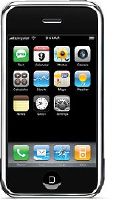
I've been running a mobile blog site for a long time now (since 2006), and although my main blog has been rather quiet over the past few weeks, I've found time to reflect on some recent activities using my new iPhone. In the past, I have used the Sony Ericsson software on the handset to send photos captured by the mobile phone's camera straight to a Blogger.com site.
Clearly this software wasn't available on the iPhone, but as with all sites that have a programmable API, there are plenty of other routes for creating blogs, many of them not new of course. Email to webpage technology allows web content to be authored within an email client and then published by sending an email which is read by the server and published. It's a really neat solution and although it has been around for at least the last 6 years it hasn't, for me, had a use until now.
The iPhone has a great web browser, and handles forms really well, so it's great for posting to any website. However, it won't allow you to upload photos because of the restrictions to being able to access the file system (with the exception of hacked iPhones.) The iPhone also has a great email client, which overcomes the problem of uploading images to a blog site.

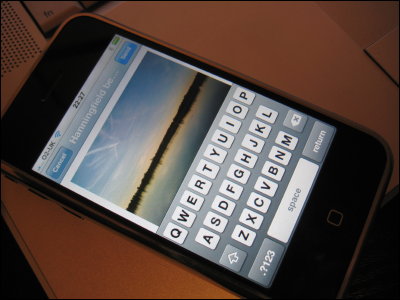
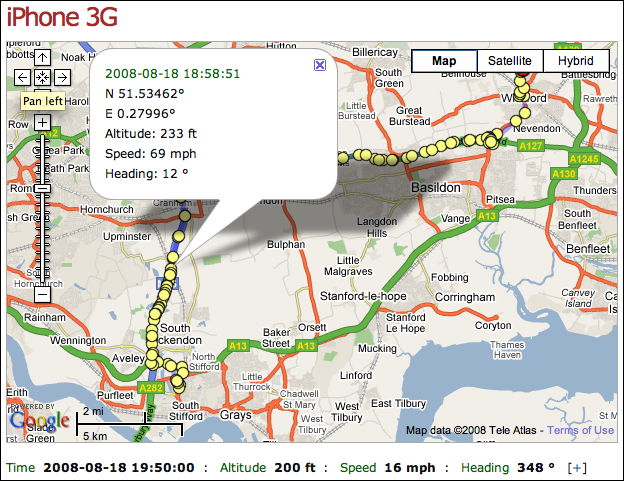
Using Blogger.com's email to blog option, I can take pictures on the iPhone, choose the Email Photo option and send it to a private address that only I know about, but one which Blogger.com receives and then publishes as a blog entry. A perfect solution, and quick too. Here are some of my most recent entries, all taken with an iPhone and blogged straight to Blogger.com using Mail.
Of course, it's not just Blogger.com that enables this technology as Flickr does this too, see my iPhone pictures on Flickr, in fact, you can see everyone elses iPhone pictures on Flickr.
Flickr will also publish your photos and accompanying annotation to most popular blog sites, or to any blog that supports xmlrpc, such as WordPress, Drupal, Movable Type.
For those of you who have a TypePad blog, the developers of TypePad have already created an iPhone interface.
I was fortunate enough to attend Apple's Special Event at the BBC in London this evening. Steve Jobs was speaking live from San Francisco, at the Moscone Center via a video link to the BBC Television Centre.
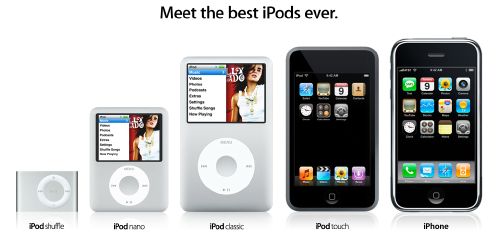
Approximately 300 guests were invited by Apple to attend the launch of the new iPod product line. The new iPod touch was the centre of attention of course, which is a shame since lots of development work has also been paid to the current and revised iPod family.
I suppose there could be very little that could distract ones attention from the web enabled iPod touch which is based on the same design as the iPhone. Same physical dimensions, apart from the iPod touch being only 8mm thick compared to the 11.5mm thick iPhone.
In a sense, watching video and music being played on the device wasn't too dissimilar from what we have seen the iPhone capable of doing - though that product has yet to make it to UK waters. I loved the addition of the YouTube application however, again much like the app available on the iPhone.
The key delight for me was learning that the device now has built in WiFi which transforms the possibilities of the device enormously. Steve concentrated largely on the fact it can hook up to the net to download songs from the iTunes WiFI Store via the custom built application. However, it was the inclusion of the Safari web browser that really captured my interest. I love listening to music and following lyrics, or even discovering the background to the artists inspiration for the music.
After having a play with the device during 'play' session after the Special Event had finished, I started to yearn for wanting a camera as an input device, which would immediately become a really sexy tool for creating a portfolio of learning. Maybe that feature might come in time or perhaps a 3rd Party developer might get there first.
Whatever, the iPod touch is a really really cool piece of kit. Some might say it's available now so we can play with the gorgeous touch screen technology whilst we wait for the iPhone's launch later this year - others, like me, can see a whole new application for this technology.
For anyone who was there, they will also have noticed the draw of breath as Steve's customary "one more thing" moment was superseded by an announcement that Apple's iPhone will now only be sold in one flavour - the 8Gb model which is now going to retail not at $599 but at $399. Amazing! That's a $200 saving for new buyers from today! The iPhone now enters the realms of 'bargain' rather than the must have device for the wealthy.
One thing is to watch the Apple Special Events as a web stream at home, it's quite another to be part of the atmosphere as products launch. What a hoot. The biggest laugh went to Steve's quip at NBC, who recently announced they were withdrawing their TV shows from the iTunes Store. Steve was demoing the new Ringtones feature in iTunes and chose the track by John Lennon "Give Peace a Chance" when NBC call...
Anyway, go look at the new iPod family for yourself...
In the Manchester Evening News, an article reports that in an ever increasing litigation culture, pupils and parents are prepared to take legal action against teachers adopting txt, email and instant messaging technologies in their communication with young people.
Whilst there are really strong reasons why txt, email and instant messaging technologies are of a great benefit to pupils' learning beyond school hours, it is important to recognise ways in which, we as teachers, we can protect ourselves from such allegations.
Email
Those using email systems should maintain a copy of any incoming and outgoing message - most email client applications such as Outlook Express, Mail, Thunderbird do this automatically and if you choose to archive the messages, you can store them for eternity. If you are using a web based client, such as Yahoo, Hotmail, or Gmail, then you should file your messages within a folder which you can access at anytime in the future. If you run out of online space, simply save the messages to a folder on your personal computer - most providers offer these functions.
Instant Messaging
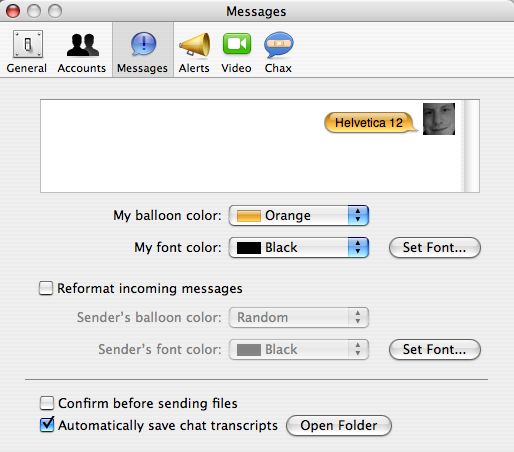
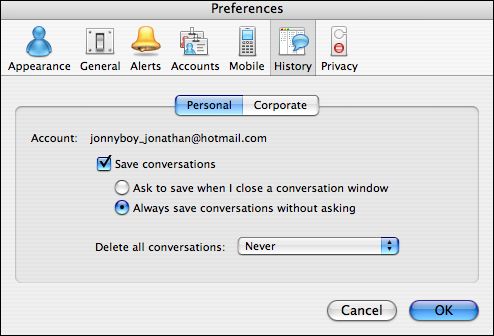
As far as keeping an account of communications with pupils using Instant Messaging, most systems allow you to save the chat transcript. I use both iChat and MSN systems and have chat transcripts automatically set to save. It means that should anyone object to a conversation that I have had with a pupil, I can recall the event in full at a moments notice. I also don't need to think about saving it - it happens automatically.
 
Txt messaging
Txt messaging is much trickier to maintain a transcript or account of communication. Unless you have a more capable phone of storing lots of txt messages and periodically exporting them to a personal computer, it's really hard to maintain an archive of what's been sent when, and to whom. I use an application called PhoneAgent that allows me to retrieve sent and received txt messages to my computer and store them in a txt file.
Common sense
The key test to apply when communicating with young people is ask yourself, would you be embarrassed, unsure or would it put yourself at risk if anyone else were to read the conversation? If the answer is yes, you probably shouldn't be having the conversation. Remember also, that any communication through txt is subject to more misinterpretation as it doesn't carry intonation or facial expression, so be aware of how what you say could be read.
The adoption of internet, phone communication technologies is so powerful that we mustn't devalue its contribution to a changing education system provision. My advice is to use your common sense, just as you would when you are teaching face to face. Apply the same rules and principles in your online presence as you would in your workplace environment. If there is ever some doubt about how an online conversation or relationship is developing, tell someone else and share the experience.
It is important to remember that as with all new technologies, we are subject to experimentation, research and evaluation - we don't necessarily know the all answers just yet, but that doesn't mean we should stop exploring. The NUT (National Union of Teachers) will understandably recommend against using technology, but, if, like the majority of teachers, we are adopting these technologies to ensure the best outcomes for our students, then it's something we are unlikely to want to change.
Access to teachers?
Another good question for debate is how much access do we give pupils to contact ourselves outside of school? I personally feel that I commit a lot, but that suits my interest, my research work and current situation.
How do the pupils at Stepping Stones use the technology with me?
Here are just a few:
- pupils ask me questions about homework, project work, coursework.
- occasionally they alert me to things that they feel I should know about, such as events, problems, illnesses, etc.
- share worries and concerns about school / home life / equipment.
- participate in out-of-hours school meetings, such as the School Council.
- txt vote choices.
- share their work, look for feedback / encouragement / ideas / critical friendship role.
How are others using txt / email / instant messaging with pupils? How are pupils adopting these technologies to work with other pupils / teachers? Share them here, I'd be really interested to hear your views.
Thanks to Derek Wenmoth for highlighting this story.
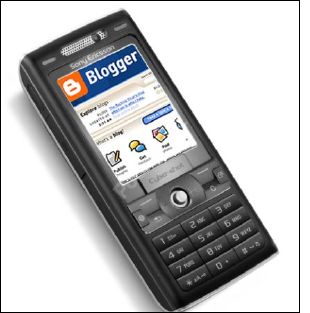
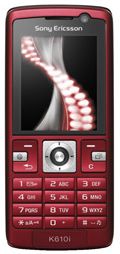
For the past 6 months I've really enjoyed using the blogging software on my Sony Ericsson handset, K610i. I've used it more as a tool for capturing places, events, objects of interest. Looking back, I now have a fairly solid journal accounting for just a tiny subset of the things I do and the people I meet. I love reflecting back on those times and it's all just, so.... easily accessible.
Essentially, the phone has an editor that allows you to take a photograph and annotate it, rather like creating an MMS message. You simply choose 'Blog this" from the More option once you have taken a photo.
The blog article is then posted to a Blogger account where you can either move the blog provided with a pre-configured URL provided by Blogger to an already existing blog account or continue with the URL that the phone/Blogger created.
The really neat thing with Blogger these days is that you can now buy a URL and associate it with your Blogger account, so your blog can be run under your own domain name - very neat, whilst using all the functionality of the Blogger engine. Alternatively, you can host your blogger content on another webserver, the pages simply get uploaded via an FTP account onto a server of your choosing. Again, as a user, you can continue to use the Blogger front end interface to administer the blog site. What more could you want?
This service is mostly reliable, apart from occasionally when I blog a photo and neither the photo nor the text make it to the blog site. No errors or any indications as to why not. It's a bit of a puzzle. If I restart the phone, the problem continues. Very strange. It could be something to do with the network provider I suppose. It's less likely to do with Blogger, I would think, but how would I know!?
I wonder if other users have experienced the same?
Read mine, Jonathan's Mobile Blog
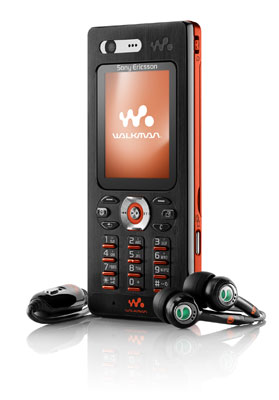
For users of the Sony Ericsson W880i mobile phone, this is a plugin that allows Mac OS X to add your new mobile device to Apple's iSync application - the application that manages your contacts, and synchronises your diary entries in iCal.
Download
Download the W880i mobile phone plugin.
Installation Instructions
To install, follow these instructions...
1. In the Finder, navigate to /Applications --> iSync and control (CTRL) -click the application
2. Select 'show package contents'
3. Navigate to Contents --> Plugins --> ApplePhoneConduit.syncdevice --> Contents --> Plugins
4. Move the folder extracted from the attached .zip file into the Plugins folder in Step 3 (above).
5. Relaunch iSync. Should work.
Please keep this service running.
Due to the enormous interest in downloading this plugin from this site and the large amount of traffic coming to my server host, I would really appreciate a donation towards the hosting costs of this service. Many thanks for your understanding.

The announcement of Apple's new flagship product, the iPhone, was incredibly exciting despite the fact the product won't be available in the UK until December 2007. We all want one of course, and no doubt, over the coming months, the desire and demand for the iPhone will soar.
Apple have yet to announce which UK mobile phone operators will support the iPhone, whilst, according to The Register, the Carphone Warehouse are ever so keen to support this new mobile device.
In fact, so keen, you can pre-register your interest here.
Still interested...?
Why not enter a competition to win an Apple iPhone? - simply enter your details and referrer email address, jonathan at learningspaces dot net - you have to be in it to win it, or so they say.
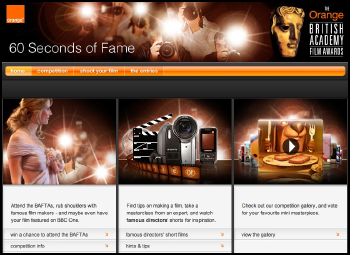
The judging for this year's 60 Seconds of Fame competition, created and sponsored by BAFTA and Orange is nearly complete.

The competition has been open to buddying filmmakers who are aged 16 or over. All you need is access to some film making equipment, a digital video camera or video capable mobile phone and a computer with which to edit the film.
I was particularly impressed by the guidance notes offered on the website... useful for any video project with youngsters. The guidance notes are simple and straightforward, and after being involved in the judging process over the past few days, clearly many of the filmmakers had listened to this advice in producing the high quality films.
The pages I found most useful were:

Take a look for yourself, and make a point of looking at the entries for this year. Winners from each region will attend The Orange British Academy Film Awards in 2007. The overall winner will have their film featured during the Film Awards broadcast.
Hopefully, the competition will be repeated again this year. See the 60 Seconds of Fame website.

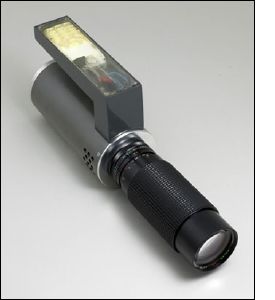
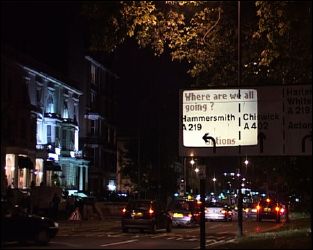
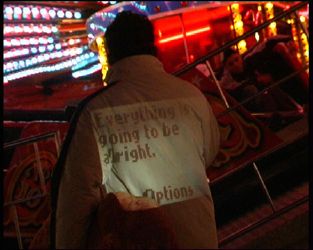
The SMS Guerilla Projector is a home made, fully functioning device that enables the user to project text based SMS messages in public spaces, in streets, onto people, inside cinemas, shops, houses…
Small, portable, and battery operated, the SMS Guerilla Projector contains a mobile phone which enables the device to
Read more about the Guerilla Projector.
Despite it looking like something out of Star Trek or Dr. Who, I love the concept of people contributing to a screen in a public space and SMS technology just seems a natural way of doing it.
In terms of eDemocracy, this would be a really handy tool. Imagine posing a question or a statement for the public to respond to, and have their contributions displayed in a public arena. Brave politicians might try it for instance, or local governments inviting for public opinion about topical issues relating to their town or county. This would be a fantastic way of engaging the public in a consultation process.
 |
|
 |
| "Where are we all going?" |
|
"Everything is going to be alright" |

If you have one of the Sony Ericsson's latest mobile phones, K610i, K800i etc you will probably find that Apple Mac OS X iSync software doesn't support them. iSync allows you to synchronise your Apple Address Book and iCal diary with your mobile phone, something that has become an essential component of my mobile life.
Wanting to transfer all my contacts from my Address Book to the new phone, I quickly established that Apple's iSync doesn't yet support this new phone... though I know Apple will in time. Needing a solution now, I used the mobile.feisar.com site. There was a small charge for the iSync Plugin.. and I know it's probably available for free somewhere, like the K800i iSync plugin can be downloaded.
New phone also means new features, here are just a few improvements over the K750i :
- 3G / video calling / video messaging - though you need to be in a 3G reception area, and of course so does the recipient!
- RSS news subscription service - really handy, I use RSS news feeds a lot on my MacBook Pro and this is far more portable.
- Blogging tool - seems to be tied into the Blogger.com service though - shame. If it handled an interface to xmlrpc that would be more useful.
- software update service - not many people care about this except for people like me. The ultimate goal is always to establish the best and the latest functionality.
- predictive word suggestion - not sure how useful this will be really.
- small thing, but significant - the on screen font has changed making it largely, softer and easier to read.
- has much improved file management features.
- the K610i is a smaller phone - which also means lighter too.
Upgrade. It's the way forward...
The release and upgrade to the new Sony Ericsson K750i a few months ago, brought with it much excitement; 2.0 Megapixel camera, custom SMS/MMS message alerts (yes, I know, why wasn't that possible before?) and removable memory cards.
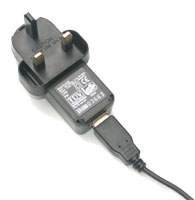
However, a very very bad feature is the new fast port connection. Why has Sony Ericsson made such an appalling decision? I guess their new method of connection is more reliable, all-in-one, perhaps ultimately more convenient.
Now the not-so-good reasons for fast port:
- When using the supplied handsfree kit in the car, you can't charge the phone, that's daft.
- Several years of accumulating Sony Ericsson chargers & handsfree kits means you can't make use of a single one, that's annoying. (It's quite nice keeping one of each in bags, houses, places of work)
- I'll now invest in a whole load of kit which Sony Ericsson are likely to change again at some point in the future - that's whimsical and deeply frustrating.
The only comfort is to consider buying USB based chargers which will have longer longevity, both available for the car and 3-pin UK plugs. Thanks Richard.

This has changed my life too, docking my phone in the cradle whenever I'm at home.
I have spent some time installing and developing a web interface to UltraSMS. UltraSMS is a little application that reads SMS (txt) messages from mobile phones and stores them in a MySQL database. It runs on Mac OS X or Linux and interfaces with several phones using Bluetooth or a serial cable connection. Tim Ellis of Ultralab developed this software, well worth a look.
This application has been used several times, most widely known for its use in Pirate BBC Essex, a local radio station celebrating 40 years of Pirate radio.
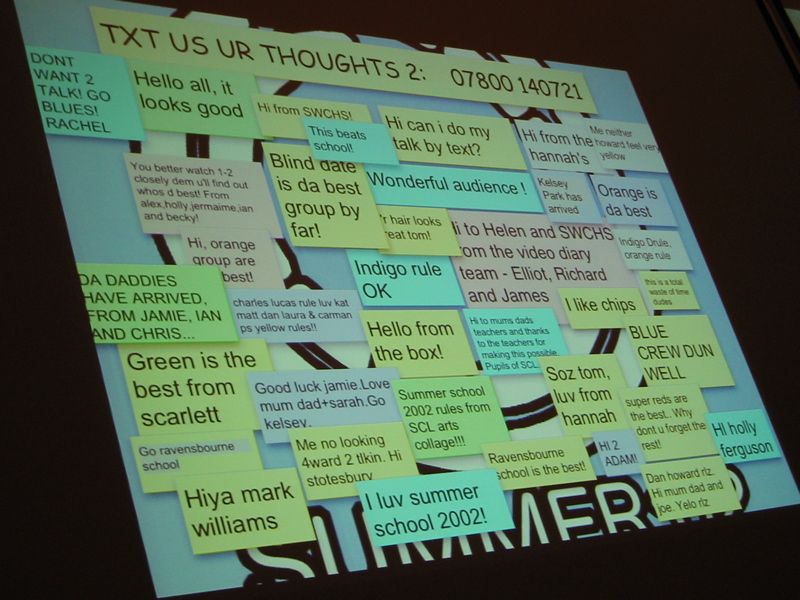
You can experiment with this tool by sending messages to my blog entry by txting anything you like to 0044 7811 636 738 You should see the entries appear, almost instantly, in the sidebar to the right. Remember to hit refresh first!
Please don't worry, your number isn't displayed anywhere on this website and before you ask, it costs the same as it would to txt anyone else, there are no hidden charges!
The neat thing about the UltraSMS application is that it is very cheap to get going... all you need is a mobile phone with a SIM card, preferably Bluetooth enabled since then you don't have to worry about cables and connections, and a Linux / Macintosh computer. That's it!
I have used the application when speaking at conferences - useful for collecting people's contributions and for the audience to post their questions as I'm speaking. Simple but effective. Though this is a photograph of a SummerSchool presentation event, you can see how people's contributions are added as 'stickies'. This 'stickies' user interface was developed by another member of the Ultralab team, Alex Blanc, using Flash.
 I had the opportunity to visit the Microsoft Home today, an ordinary three storey home situated in Kensington and Chelsea, West London.
Essentially, Microsoft have created a show home to illustrate what is possible with todays technology and how this can have an impact on your daily 'home' life. The intention was to take us to different rooms in the house and show what devices could be used in each of the domains. We began in the living room...
the living room:
Here, we were introduced to the Microsoft Media Center, a more highly specified computer which allows you to watch TV, record, schedule, pause and rewind live TV. Much in the same way that Sky + functions. What is interesting, and very Microsoft, is how they have developed a dedicated software application which is the interface to the TV, schedules, listings, previous recordings, and provides simplistic access to your photo collection, music collection and movies. The box operates from a single infra-red remote control or from a standard (wireless) keyboard and mouse. We were briefly (!) introduced to the interface which controls electrical devices around the house, ceiling and desk lamps, heating, blinds, CCTV etc. However, this couldn't be demonstrated due to the teething troubles, but it's definitely an area that I would like to explore more. I'm very excited by the prospect of switching the heating on an hour before arriving home, warming the oven before you turn the key in the door, etc.
the kitchen:
 This room could have been so much more. They had flat, touch sensitive screens that allowed you to operate the computer, sparing the use of sticky fingers on the keyboard. Again, this was a home PC running Microsoft Media Center. There was the moment where our demonstrator video conferenced to a 'friend' in 'Italy' (yeah...right!) making out that wanted to cook a really tasty dish but didn't have the recipe. For her efforts, she was rewarded by her 'friend' sending her a high quality video showing how you'd make a pesto sauce... hmmm, ok. She needed some ingredients, and I immediately felt sorry that she didn't have what she needed. But luckily she had the tablet PC to hand. The tablet was set up to hand-write a shopping list, which when pasted into Tesco's online form, was interpreted as electronic text. I found this demonstration a really appropriate use of technology. I can see how one could create a template shopping list, save it, and modify it each week. The Tesco interface really is quite useable. I've never done an online shop with Tesco, or any other supermarket for that matter. Something I ought to try perhaps... should I worry about the milk arriving warm and the fresh meat going through a few heat cycles?
Anyway, the little bluetooth laser projection keyboard was a really neat product (not Microsoft's)
"The Virtual Laser Keyboard leverages the power of laser and infrared technology and projects a full-size keyboard onto any flat surface. As you type on the laser projection, it analyzes what you're typing by the coordinates of that location."
upstairs:
 Some gizmos were found upstairs. A mirror where the lower region had an LCD display screen built behind the glass, once again coupled to a Microsoft Media Center box. There was also a handheld pocket PC with smart voice recognition software. Our demonstrator was quick to point out that the device has voice recognition but no voice training so it pretty much works for anyone. I instantly thought back to the days of the Apple Newton Messagepad which did all this, but here are the early signs of some of this technology (finally) coming back into useable devices. As you might expect, the handheld PC could manage your diary, emails, play music etc. Every device was able to synchronise with the Media Center PC's.
In the children's bedroom there was a music system which could stream music from the Media Center, wherever that is located in the house. The intention would be that there would be a single Media Centre, unlike the 5 or 6 that this house has. The laptop computer had a fingerprint scanner enabling users to login using no more than their index finger. Must look for similar devices for Mac OS X computers... at £60 these are quite a cheap technology to implement... and kinda fun too.
on reflection:
All in all there was a real sense of intrigue and anticipation about the Microsoft Home before I entered. As I walked down the steps on my way back to the lab, I reflected on what I had seen. I didn't think the home used particularly ground-breaking technology, but appreciated their honesty and understood that they had a clear remit which was to bring safe, stable products to the home consumer. In a sense, because of these reasons, they couldn't afford to do very much which pushed the boat out. Unfortunately, the proprietary nature of their products is a bit of a turn off - for instance, how would my existing devices fit within their framework for the digital lifestyle?
As my experience and understanding of technology grows, the more I appreciate the need to maintain open standards and this alone will surely shape the future of new technologies. I did enjoy their brave attempt to bring together a variety of media, photos, videos, tv, device control and make this accessible to the consumer through a single interface in a way that isn't going to make the 'newbie' run a mile. Certainly food for thought...
SpotCode is one of the latest ways you can interface your camera phone with the web...how cool? I like the potential for using your phone as your 'identity' on the web. Of course a phone is a pretty useful tool for identity since your phone and number is genuinely unique.
Pirate BBC Essex Radio station is soon to go 'on air' - all our efforts are now focused on developing the software which will enable members of the public to TXT message or email the radio presenters whilst on board LV Eighteen, the Lightship from which the broadcast will be made.
We needed to obtain an SMS number and a mobile phone. We went to a number of Mobile phone shops in Chelmsford, asking for "mobile phone numbers which are good for broadcasting on air."
Luckily, many people were keen enough to help us out, they dug through hundreds of numbers, until we found the one, well... sadly it wasn't available so we settled for the next best number. We cheekily asked if they'd lend us a phone for the duration of the Pirate radio broadcast, and in true British style they provided us with a Nokia Picture phone - cool huh!
Our first plug goes to Adam Jamieson & Russ McIntosh at The Link in Chelmsford, cheers guys.
|